
The Pact That Doesn't Name Its Enemy
For decades, three states treated Washington as their ultimate security guarantor. In August 2026, they stopped waiting for it. The Makkah defense pact between Pakistan, Turkey, and Saudi Arabia is framed by all three governments as purely defensive. The real question the pact never answers is: defensive against whom?
Gulf states' distrust of Washington as a security guarantor didn't start in a vacuum; it has precedent. When Israel first struck Iran's nuclear program in June 2025, Israeli officials told Axios they were "urging" the US to join; Washington did, days later, bombing Fordow after asking Israel to clear a path for its bombers first. That pattern of Israel setting the terms and the US following recurred when the two countries launched a fresh, joint war against Iran on February 28, 2026, a campaign Gulf states say they had no advance warning of. Officials speaking anonymously described operations "primarily focused on safeguarding Israel and American troops, compelling Gulf nations to fend for themselves," even as their own interceptor stockpiles ran low. The Congressional Research Service later put the same sentiment more diplomatically: Gulf officials expressed "varying degrees of frustration with Israel and the United States for initiating strikes against the public advice of the GCC states." On August 7th, Pakistan, Turkey, and Saudi Arabia signed a mutual defense pact to independently arrange their security against any future threat from Israel, establishing, in the process, a collective security framework for West Asia.

Pakistan's head start
Pakistan's entry into this trilateral was not a sudden pivot. Islamabad has for two years positioned itself rhetorically alongside Beijing's vision for a multipolar security order: Pakistan's ambassador to China, Moin ul Haque, has said Islamabad "strongly supports" Xi Jinping's Global Security Initiative, calling it essential to addressing "the urgent needs and difficulties of a divided and unstable world." That alignment does not mean China engineered the Makkah pact, and no reporting suggests it did. What it shows is that Pakistan was ideologically primed for a collective-security arrangement built around self-determination rather than deference to Washington. The concrete first step came earlier and closer to home: months before the Makkah signing, Pakistan and Saudi Arabia signed a bilateral Strategic Mutual Defence Agreement in Riyadh, committing each to treat an attack on the other as an attack on itself. Makkah, then, reads less as a diplomatic surprise and more as the natural extension of a bilateral commitment Pakistan had already shown itself willing to make.
Turkey's independent alignment
Turkey, NATO's second-largest army, had demonstrated a pattern of independent alignment well before the Makkah agreement. It purchased S-400 air defense systems from Russia over explicit NATO objections, a decision that got it removed from the F-35 program; its Syria policy has likewise diverged from Western positions.
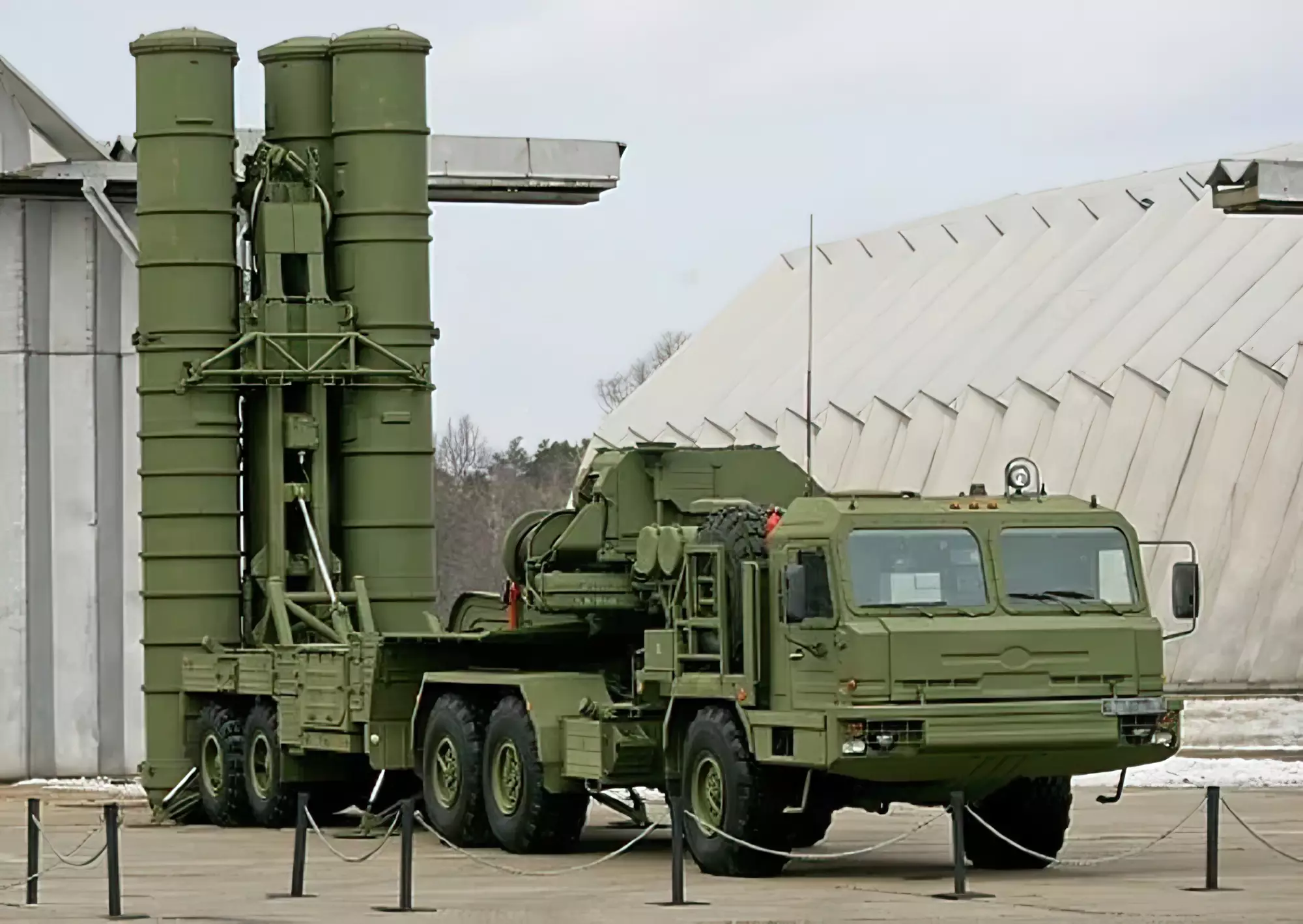
Turkey's signature on Makkah, then, was not a break from this posture but a continuation of it, driven by the same defense-against-Israel logic that brought Saudi Arabia to the table. The agreement was signed on August 7th. Eleven days later, Israel struck the Abu al-Duhur airbase in Syria, reportedly to preempt a deepening Turkish military presence in the country; regional analysts described the strike as a message aimed as much at Washington as at Ankara. Turkey accused Israel of trying to undermine the Makkah agreement directly. Whatever the strike's intended audience, its timing vindicated the threat perception that had brought Turkey into the pact in the first place. Ankara arrived at the same defensive position as Riyadh, but by a different road: independent military posture, not a US-issued ultimatum.
Saudi Arabia's ultimatum
Saudi Arabia sought a civil nuclear program from Washington as a hedge against Iran's own nuclear ambitions, its most direct security concern in the region. A day after the deal was signed, Trump declared it conditional on Saudi normalization with Israel through the Abraham Accords. Riyadh has said normalization is possible only with a credible path to Palestinian statehood, which Israel has so far declined to offer.
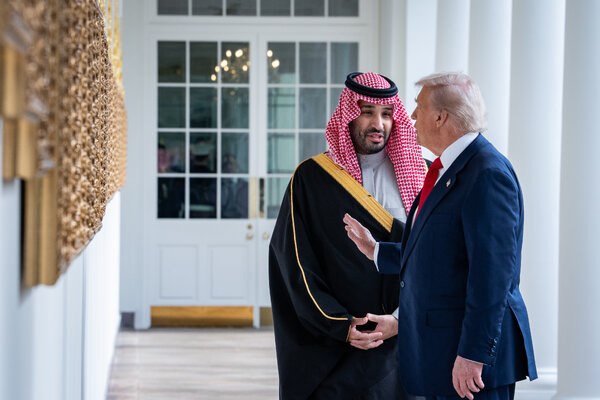
Caught between a nuclear program it wanted and a recognition it wasn't willing to grant for free, Riyadh moved toward a security arrangement that didn't run through Washington at all.
On paper, Iran looks like Saudi Arabia's primary threat in this pact, not Israel; the Iran war and Houthi attacks give that reading a real paper trail. My read runs the other way, and I want to be clear this is inference, not Riyadh's stated position: Pakistan's demonstrated mediating credibility with Iran, shown by its lead role (alongside Qatar) in brokering the Islamabad Memorandum that ended the Iran war, gives Riyadh a plausible diplomatic channel with Tehran that it simply does not have with Israel. Iran can still be talked down. Israel, expanding and unconstrained, cannot.
Defensive against whom
Pakistan, Saudi Arabia, and Turkey, through different motivations, arrived at the same destination: a defense pact structured around an unstated but identifiable foe. It was stated by all three that the pact was "defensive," but this framing raises a question that needs an answer: defensive against whom? There has to be an actor against which the defense is being sought. The purely defensive language from all three parties does not contradict my thesis; it supports it.
Pakistan's ideological alignment with China's Global Security Initiative suggests that the Makkah pact may be the start of a larger, independent security framework for the region, open to any state willing to arrange its own security guarantees rather than rely on Washington's.
These three states could not trust Washington's security umbrella, and increasingly don't trust Israel's restraint. That pushed them to build an alternative, arguably the foundation of an independent regional security framework for West Asia.
This is a personal opinion piece. It draws on reporting and analysis referenced above.